Licensed, Bonded & Insured
Palm Beach U-21244
Broward 09-P-15607-R



Painting the exterior of a coastal home presents unique challenges. The salt air and moisture can really wear down surfaces over time. We’ve put together some tips to help make your stucco painting coastal homes project a success, ensuring a finish that looks good and lasts.
When we think about painting stucco on homes near the coast, we’re not just picking a pretty color. The environment throws some serious challenges our way, and the paint needs to stand up to them. We need to be smart about what we choose.
The biggest issues we face here are salt spray, high humidity, and strong sun. That salt in the air? It can really eat away at surfaces over time, causing chalking and fading. Then there’s the constant dampness from the humidity. This can lead to mold and mildew growth if the paint isn’t breathable. And don’t forget the sun; intense UV rays can break down paint binders, making the finish look dull and worn out much faster than inland. We’ve seen paint jobs fail prematurely because they just couldn’t handle the constant barrage of these elements. It’s all about picking a paint that’s built for this kind of tough environment.
So, what kind of paint should we be looking for? We need something that’s specifically designed for exterior use and, ideally, formulated for stucco. Look for paints labeled as elastomeric or high-quality acrylic latex. These types of paints are flexible, meaning they can handle the natural expansion and contraction of the stucco as temperatures change without cracking. Breathability is also key. A breathable paint allows moisture vapor from inside the wall to escape, preventing it from getting trapped and causing problems like blistering or peeling. We want a finish that looks good and lasts, not one that starts to look tired after just a couple of seasons. Check the paint can for terms like ‘high-hiding,’ ‘weather-resistant,’ and ‘mildew-resistant.’ These are good indicators that the paint has the properties we need for our coastal stucco.
Here’s a quick rundown of what to look for:
When selecting paint, always read the manufacturer’s specifications. They often provide details on suitability for specific climates and surfaces like stucco. Don’t be afraid to ask for recommendations at your local paint store; they usually know what holds up best in our area.
Before we even think about slapping on a fresh coat of paint, we need to get the stucco surface ready. This part is super important, maybe even more than the painting itself, especially with the salty air and wind we deal with here. A well-prepped surface is the key to paint that actually sticks around.
First things first, we’ve got to get this stucco clean. We’re talking about washing away salt spray, mildew, dirt, and any loose bits of old paint. A good pressure washing usually does the trick, but we need to be careful not to use too much pressure, which can damage the stucco. We’ll start with a lower setting and work our way up if needed. We also want to use a cleaner that’s made for stucco, something that won’t harm the material.
After washing, we’ll inspect the stucco closely for any cracks, holes, or crumbling areas. These need to be fixed before we paint. We’ll use a good quality stucco patching compound. For bigger issues, we might need to do some more involved repairs, maybe even replacing some sections if they’re really bad. It’s better to take the time now than to have paint peeling off in a few months because we skipped this step.
Once everything is clean, dry, and repaired, it’s time for primer. Not just any primer, though. We need a high-quality masonry primer that’s specifically designed for stucco. This primer does a few things. It seals the porous stucco surface, which stops the topcoat from soaking in too much and looking uneven. It also helps the paint stick better, giving us a finish that lasts longer against the coastal elements. We’ll make sure to apply it evenly, covering all the repaired areas and the entire surface.
Skipping primer on stucco is like building a house without a foundation. It might look okay for a little while, but eventually, things are going to start falling apart. We want this paint job to last, so we’re not cutting corners here.
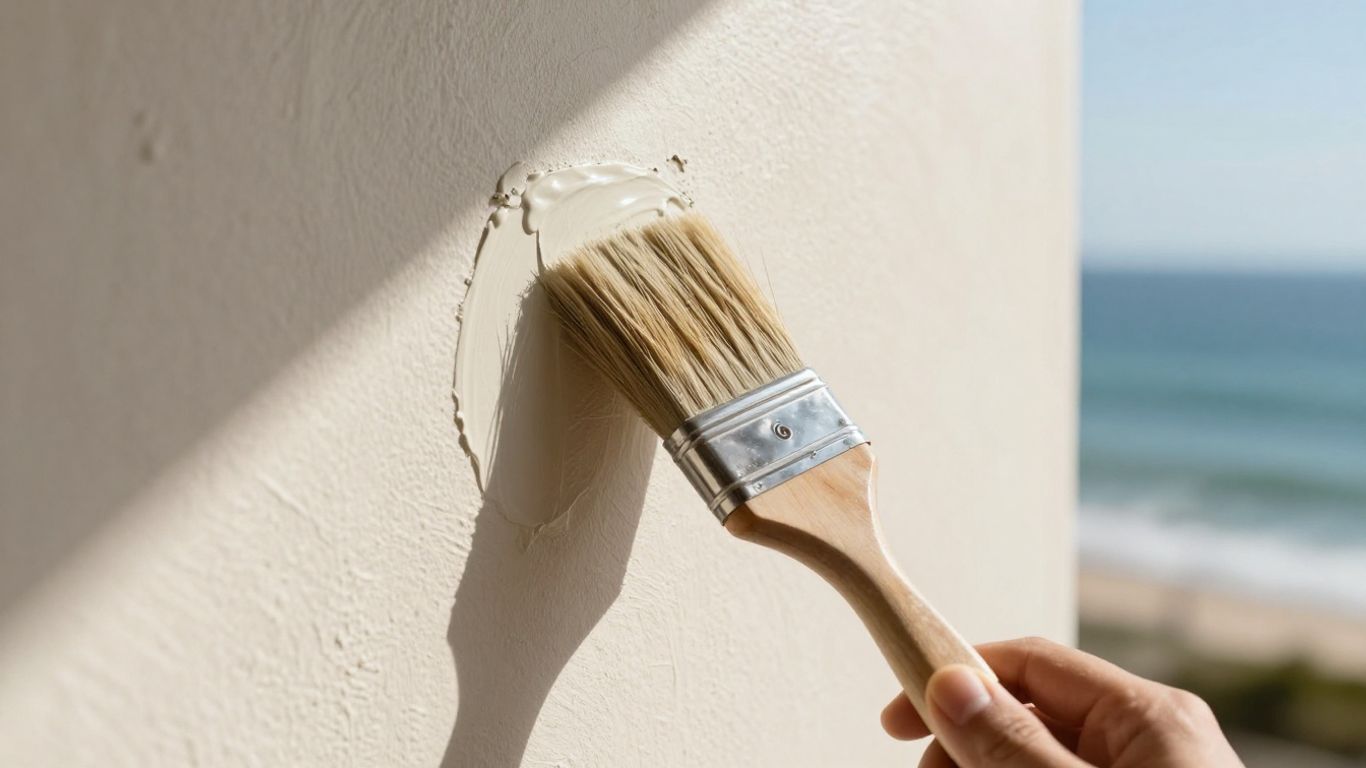
Applying paint to coastal stucco requires a bit of know-how, especially with the salty air and humidity we deal with. We want this paint job to last, not peel off after the first storm. So, let’s talk about how we get it on there right.
When it comes to getting paint onto stucco, we have two main options: spraying or rolling. Each has its place, and knowing when to use which can make a big difference. Spraying is often faster, especially on large, flat areas. It can give a really uniform finish if done correctly. We usually use a sprayer for the main body of the house. However, we need to be careful about overspray, especially if there are windows, doors, or landscaping we want to keep clean. Masking everything off properly is key here.
Rolling is a bit more hands-on. It’s great for getting into textured areas and for smaller jobs or touch-ups. We find that using a roller with a thicker nap can help push the paint into the stucco’s pores, giving us better coverage. For stucco, we generally prefer a medium-nap roller, around 3/4 inch, to handle the texture without getting bogged down. It takes more effort than spraying, but we have more control.
This is where things get tricky, especially near the coast. Humidity can make paint dry faster than we’d like, or it can make it dry too slowly, leading to other problems. The goal is to maintain what we call a ‘wet edge’. This means that as we move from one section of the wall to the next, the edge of the painted area is still wet. This helps us avoid lap marks, which are those visible lines where one section of paint dried before the next was applied.
Here’s how we tackle it:
When we’re painting stucco in a coastal environment, the salt in the air can be tough on paint. It can break down the binder over time, leading to chalking or premature failure. That’s why using a high-quality, breathable paint is so important. It needs to be able to let moisture escape from the wall while still protecting the surface from the elements. We’ve found that acrylic-latex paints specifically formulated for exterior use and stucco tend to perform the best in these challenging conditions. They offer good flexibility and adhesion, which are vital for stucco’s movement and texture. We always make sure to read the paint can for specific instructions on application temperature and humidity limits. It’s better to be safe than sorry when you’re investing time and money into a paint job that needs to withstand the sea air.
So, we’ve gone over a few things to think about when painting stucco on your home by the sea. It’s not just about picking a pretty color, you know? We talked about how the salt air and sun can really do a number on paint, so picking the right kind is a big deal. And getting the surface ready? That’s half the battle, honestly. Don’t skip those steps, or you’ll be doing it all over again sooner than you think. We hope these tips help you get a finish that looks good and lasts. Happy painting!
For homes by the sea, we need paint that can handle salty air and lots of moisture. We should look for special stucco paints that are tough and let the wall breathe. This stops moisture from getting trapped inside, which can cause problems later on. Think of it like giving your house a good raincoat that also lets it take a breath.
Before we even think about painting, we must give the stucco a really good cleaning. We need to scrub off any dirt, salt, or mold that has built up. If there are any cracks or holes, we must fix them first so the new paint has a smooth, solid surface to stick to. After cleaning and fixing, we’ll put on a special coat called primer. This helps the paint stick better and last longer, like putting down a good foundation before building.
When we paint, we can use sprayers or rollers. Spraying can be faster for large areas, but we need to be careful to get an even coat. Rollers are great for getting good coverage, especially if we work in sections. The most important thing, especially when it’s humid, is to keep a ‘wet edge.’ This means we paint from one wet spot to another without stopping. Doing this helps us avoid ugly lines or marks in the paint once it dries.

Leave a Comment